Blood clots during menstruation, chronic fatigue or anemia? Consider adenomyosis.
安
Adenomyosis
Endometrial tissue grows into the uterine wall and proliferates, progressively thickening the wall. Unlike fibroids, it does not form a localized mass but grows diffusely throughout the uterine wall, as if scattered like grains of sand.
Clots during menstruation Bleeding
Within the uterine wall, endometrial tissue
Abnormal proliferation of endometrial tissue causes enlargement of the uterine wall
Symptoms of adenomyosis
Menstrual blood clots
Chronic fatigue
Anemia
Abnormal bleeding often occurs during menstruation, so many people do not recognize that it is abnormal. The resulting anemia may cause severe fatigue, reduced motivation, poor appetite, indigestion, memory decline, headache and other systemic symptoms.
安
Treating adenomyosis
Accurate diagnosis and early treatment require assessment of ultrasound findings together with menstrual patterns, overall condition and other clinical symptoms.
Have you been told to wait because it is not time for surgery? Do you believe hysterectomy or an intrauterine device are the only treatments?
Adenomyosis can be treated!
Adenomyosis frequently coexists with endometriosis. Because endometriosis is a major cause of infertility as well as menstrual pain, clinical symptoms need to be assessed together for accurate diagnosis and early treatment.
安
RFA (radiofrequency ablation)
RFA is described as a safe nonsurgical treatment that preserves the uterus, causes less pain and has a short recovery period.
No abdominal incision
Uterine lesions coagulated and ablated
How radiofrequency ablation is performed
Why is radiofrequency ablation safe?
For uterine fibroids and adenomyosis, RFA energy coagulates and destroys uterine lesions. Under real-time transvaginal ultrasound guidance, an electrode is passed through the vagina into the lesion; heat is then generated to ablate it. Only the lesion is treated, preserving the uterus without hysterectomy.
Without general anesthesia, performed under sedation
Within 30 minutes to 1 hour a short procedure
After about 4–5 hours of rest, return to daily activities immediately
Pain controlled with an analgesia device minimal pain during treatment
Abdominal pain, heavy menstruation and more: excellent treatment effects
No hysterectomy, no abdominal incision: a treatment that ablates uterine lesions
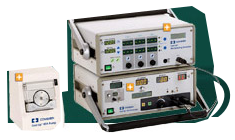
RFA with Cool-tip® system: Covidien, USA (widely used in countries including the United States and Japan)
The safest, most precise transvaginal ultrasound method
No scars! No resection! Safety first!
Conventional radiofrequency ablation has been performed laparoscopically or under transabdominal ultrasound guidance. Recent HIFU procedures are also mainly performed under transabdominal ultrasound guidance.
Transvaginal ultrasound is the most accurate and straightforward way to visualize the uterus. Our clinic uses it to guide RFA for safe, precise treatment.
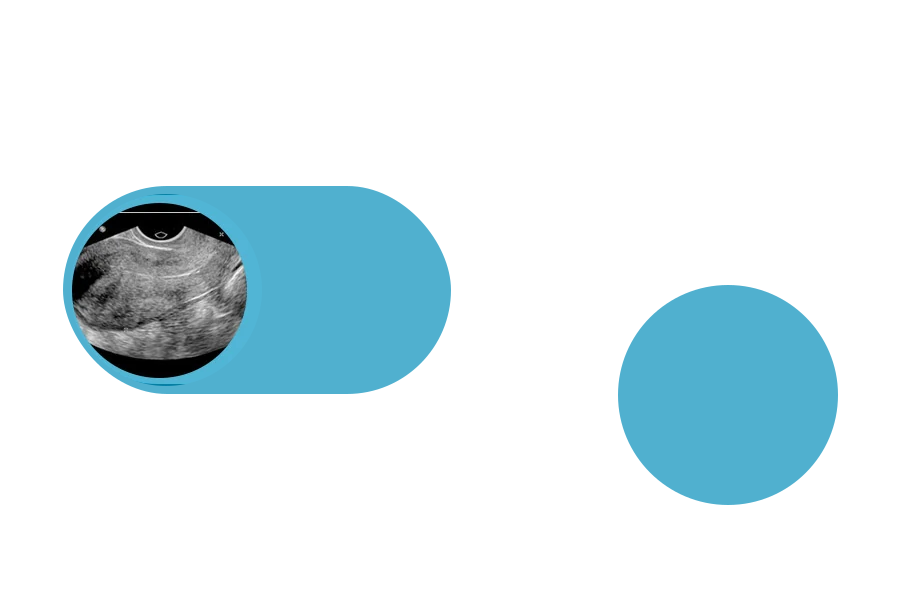
With transvaginal ultrasound, safe and precise treatment
Through the vagina, radiofrequency stimulation
安
Radiofrequency ablation treatment example
This example shows treatment of the lesion alone while preserving the uterus, with the fibroid almost disappearing after radiofrequency ablation.