







Fatigue and lack of energy
A possible thyroid warning sign
Excess thyroid hormone is called hyperthyroidism and insufficient hormone is called hypothyroidism. Blood tests measuring hormone levels help diagnose thyroid dysfunction.

What is the thyroid?
The thyroid is a butterfly-shaped endocrine gland in the center of the front of the neck, in front of the larynx and trachea.
Thyroid conditions
Hypothyroidism
A state of reduced metabolism caused by insufficient thyroid hormone.
- Low energy
- Persistent fatigue
- Constipation
- Sensitivity to cold
- Muscle cramps and stiffness
- Weight gain despite poor appetite
- Dry skin and hair
- Hair loss
Hyperthyroidism
Excessive secretion of thyroid hormones causes thyrotoxicosis.
- Weight loss despite a strong appetite
- Heat intolerance
- Rapid pulse and palpitations
- More frequent bowel movements
- Fatigue, anxiety and restlessness
- Muscle paralysis
- Dry eyes, keratitis or double vision
Thyroiditis
It can arise from autoimmune reactions involving thyroid antibodies, viral or bacterial infections, or medication.
Most thyroiditis maintains normal hormone production and causes no specific symptoms. In some cases, inflammation gradually damages thyroid cells and eventually leads to hypothyroidism.
Thyroid cancer
A malignant nodule or small lump in the thyroid.The original text cites 2014 Korean statistics: thyroid cancer accounted for 14.2% of all cancers and ranked first overall and among women.
- A large nodule or sudden recent growth
- Breathing difficulty from a large nodule pressing on the trachea or esophagus
- Hoarseness
- A very hard nodule
Thyroid examinations
Blood tests, ultrasound and biopsy are selected according to symptoms for detailed thyroid assessment.
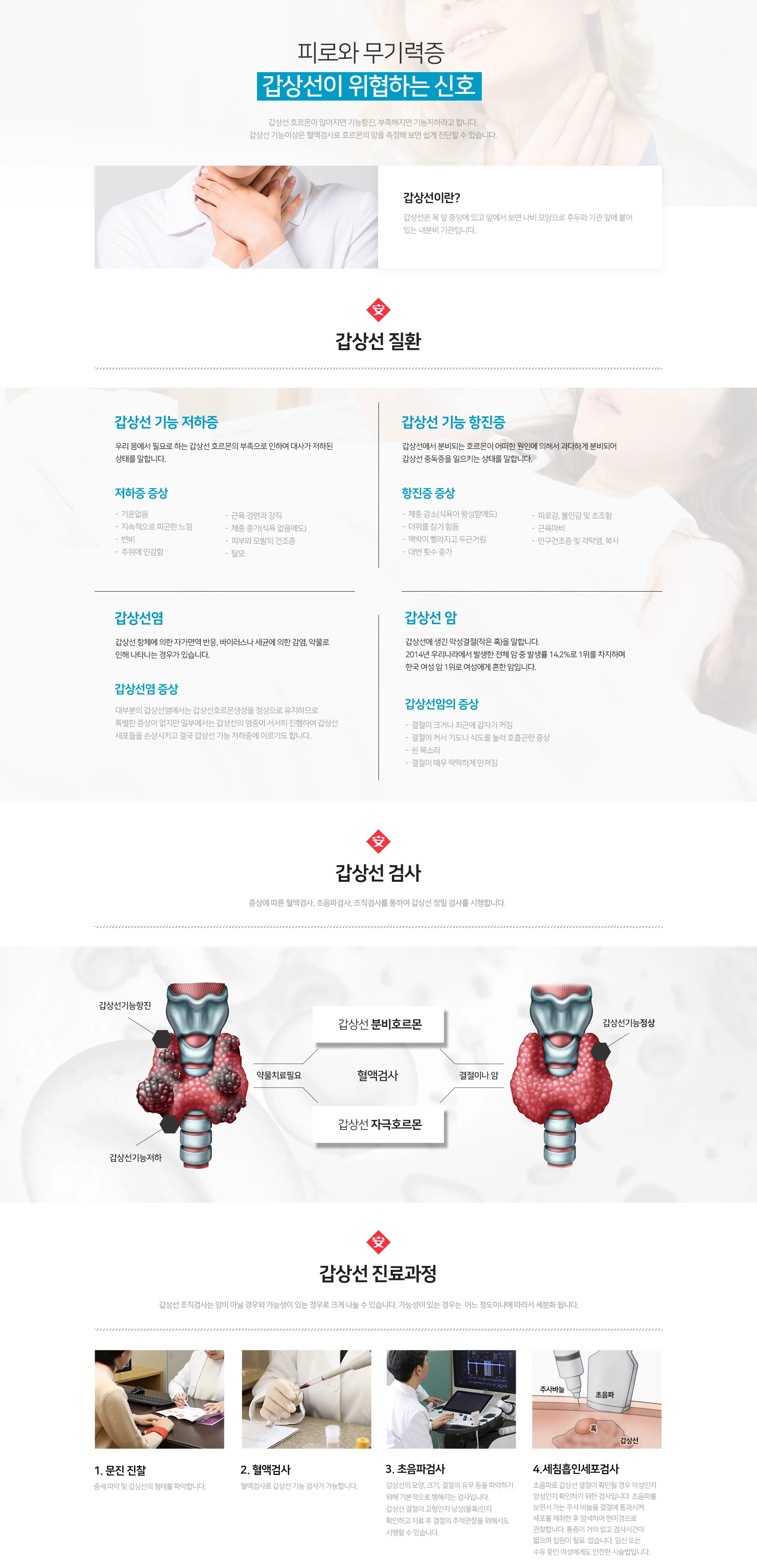
Thyroid care process
Biopsy results broadly distinguish non-cancerous findings from possible cancer. Possible cancer is further classified by the degree of likelihood.
1. History and examination
Assessing symptoms and thyroid shape.
2. Blood tests
Blood tests assess thyroid function.
3. Ultrasound
A basic examination assessing thyroid shape, size and the presence of nodules.It distinguishes solid from cystic nodules and can monitor nodules after treatment.
4. Fine needle aspiration cytology
When ultrasound identifies a nodule, this test helps determine whether it is benign or malignant.Under ultrasound guidance, a fine needle passes into the nodule to collect cells, which are stained and examined microscopically.The source describes minimal pain, a short examination and no need for admission.The source states that it is also safe during pregnancy or breastfeeding.