







Human papillomavirus
Cervical cancer is a malignant tumor of the cervix, the entrance to the uterus. Human papillomavirus (HPV) infection is its main cause.The original text reports approximately 4,000 new cervical cancer cases and about 900 deaths each year.Vaccination can help prevent cancer before it develops.
| Category | Gardasil 9 | Gardasil 4 | Cervarix |
|---|---|---|---|
| Vaccine | |||
| Eligibility and schedule | Ages 9–14: two doses, six months apart Starting at ages 15–26: three doses at months 0, 2 and 6 | Ages 9–13: two doses, six months apart Starting at ages 14–26 or above, as listed in the original: three doses at months 0, 2 and 6 | Ages 9–14: two doses, six months apart Starting at ages 15–25: three doses at months 0, 1 and 6 |
| HPV types covered | HPV types 6, 11, 16, 18, 31, 33, 45, 52 and 58 | HPV types 6, 11, 16 and 18 | HPV types 16 and 18 |
Gardasil 9
Eligibility and schedule
Ages 9–14: two doses, six months apart
Starting at ages 15–26: three doses at months 0, 2 and 6
HPV types covered
HPV types 6, 11, 16, 18, 31, 33, 45, 52 and 58
Gardasil 4
Eligibility and schedule
Ages 9–13: two doses, six months apart
Starting at ages 14–26 or above, as listed in the original: three doses at months 0, 2 and 6
HPV types covered
HPV types 6, 11, 16 and 18
Cervarix
Eligibility and schedule
Ages 9–14: two doses, six months apart
Starting at ages 15–25: three doses at months 0, 1 and 6
HPV types covered
HPV types 16 and 18
Shingles
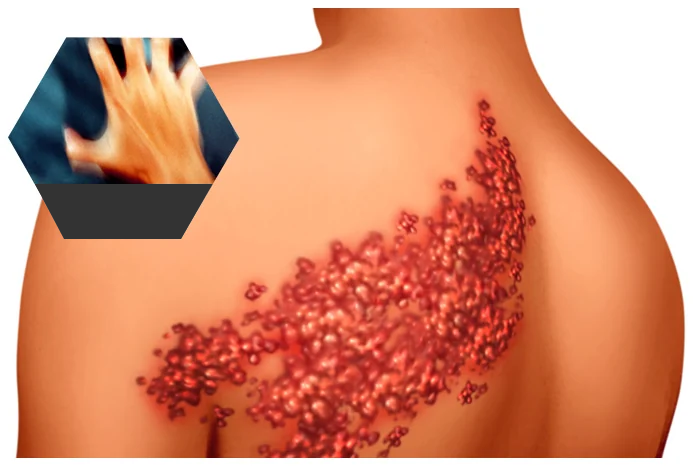
A condition caused by varicella-zoster virus
A blistering rash surrounded by redness appears on one side of the body, accompanied by itching or pain at the affected area.
In people who previously had chickenpox, the causative varicella-zoster virus can remain latent in nerve ganglia and later reactivate, causing shingles.
Other vaccines
Hepatitis A
Hepatitis A spreads easily through contact with an infected person or water or food contaminated with the virus.The original text describes a recent resurgence of hepatitis A.It attributes this to very low antibody prevalence among younger people.After checking antibodies, two doses are given at months 0 and 6.
Hepatitis B
Although hepatitis B vaccination is included in routine childhood immunization, the original text states that about 2% of adults remain antigen-positive.After antigen and antibody testing, people who are antigen-positive need regular examinations and consultation. Vaccination is indicated when both antigen and antibody tests are negative.Hepatitis B vaccination is given in three doses at months 0, 1 and 6.
Influenza
One dose is recommended each year between September and November.
Pneumococcal vaccine
The original text recommends a single dose for adults in risk groups and adults aged 65 or older.